
Central Park Cherry Blossoms
Find everything you need to know about the cherry blossoms in Central Park.
Every spring, the cherry blossom trees in Central Park draw visitors, families, photographers, and nature lovers from all over the world, and it's easy to see why. There are few places where you can walk beneath the cherry blossoms, then stumble onto a meadow, a fountain, or a castle within the same afternoon.
Cherry blossoms, known in Japanese tradition as sakura, were brought to the U.S. as a gift from Japan in the early 20th century and have been a beloved part of Central Park ever since. They symbolize friendship between the two countries, and the fleeting beauty of their season is central to the Japanese custom of Hanami, where people gather simply to sit and admire the blooms.
This guide covers bloom times, the best viewing locations, and tips for making the most of the season whether you're visiting for the first time or returning for an annual tradition.
When is Cherry Blossom Season
Cherry blossom season is spectacular but brief, so timing your visit makes a real difference. Cherry blossoms in Central Park typically begin blooming in late March and reach their peak in mid- to late-April, with peak bloom typically lasting just 5 to 7 days, although this can vary due to weather conditions.
The cherry blossom trees in Central Park primarily consist of two varieties: the Kwanzan and the Yoshino cherries, which bloom at different times, extending the viewing season. There is also the Higan cherry tree (Prunus itosakura), which features white and pink blooms and can be found prominently along the Great Lawn in Central Park.
Yoshino cherry trees are known for their delicate, light pink petals and typically bloom first in early April, while Kwanzan cherries, which have fuller pink blooms, follow later in the month or early May and can last longer, sometimes up to two weeks.
Magnolia trees also bloom in late March and early April, adding to the spring display.
Where to Find Central Park Cherry Blossoms
The highest concentrations of cherry blossoms in Central Park can be found between 72nd Street and 96th Street, around the Jacqueline Kennedy Onassis Reservoir, Cherry Hill, Pilgrim Hill, the Great Lawn, and Cedar Hill.
Beyond those main areas, you'll also find cherry blossoms in Central Park near Bethesda Fountain, Bow Bridge, Wagner Cove, Conservatory Water, and the East Meadow. The Richard Morris Hunt Memorial on the eastern side of the park is another quieter spot worth adding to your route if you want to avoid the highest concentrations of visitors.
See: Map of Cherry Blossom Trees in Central Park

Yoshino Cherry Trees
About the Tree
The Yoshino is typically the first to bloom in Central Park, producing light pink, almost white, five-petal flowers in clusters of five or six, with a handful of blooms opening before the leaves even appear. Yoshino cherry trees line many of the park's most scenic paths, and their delicate flowers are in full bloom for just a short window, so catching them early in the season rewards planning. As the season progresses, the leaves emerge in a bronze color and gradually shift to darker green through the summer. These trees grow to 35 to 45 feet and carry a light fragrance.
Where to Find Yoshino Cherry Trees
The best places to find Yoshino cherry trees are along the east and west sides of the Reservoir, and at Cherry Hill, which offers a picturesque lakeside setting overlooking the Lake. Pilgrim Hill is known for its sweeping Yoshino display and is one of the most popular viewing areas during peak bloom. You'll also find them along the Nell Singer Lilac Walk northeast of Sheep Meadow and near the Delacorte Theater.
When the Yoshino season winds down, the Kwanzan cherry trees take over with a deeper, fuller bloom that extends the season by several more weeks.
Kwanzan Cherry Trees
About the Tree
The Kwanzan blooms after the Yoshino, with full double-petal pink flowers that are deeper and more dramatic than their counterpart. The trees are smaller, reaching 25 to 30 feet with a wide vase-shaped crown, and they don't produce fruit. Their leaves follow the same bronze-to-green arc as the season progresses, turning yellow, orange, and copper in fall. The Kwanzan has a lifespan of 15 to 25 years and is also known as the Japanese Cherry, commonly found in Japan, Korea, and China.
Where to Find Kwanzan Cherry Trees
The east and west sides of the Reservoir feature some of the densest clusters of cherry blossoms, including both Kwanzan and Yoshino varieties. Kwanzan cherry trees are also concentrated at Cedar Hill and throughout the Glade just south of Cedar Hill between 74th and 77th Streets. Directly behind the Metropolitan Museum of Art on the Upper East Side is a quieter option away from the main crowds. The Great Lawn is another strong spot, where the Higan cherry tree (Prunus itosakura) also blooms with white and pink petals, adding to the mix of varieties on display.
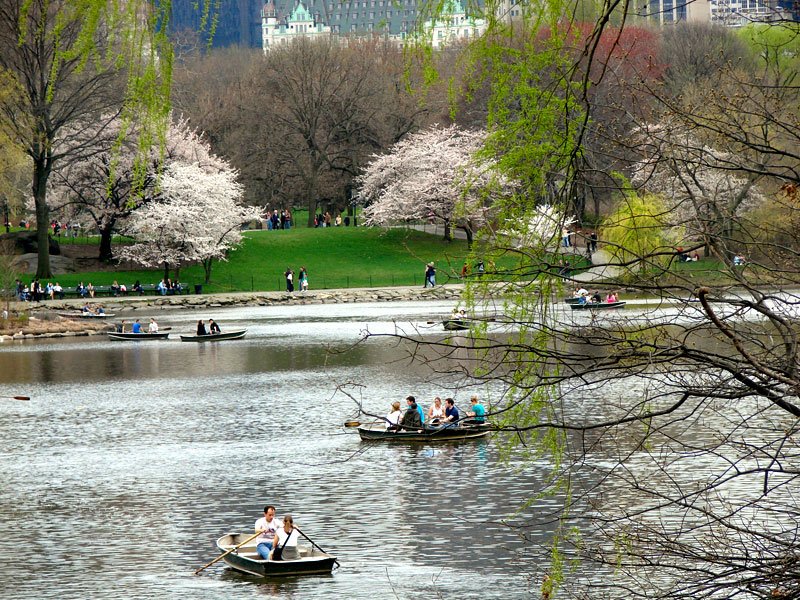
With so many spots to explore across the park, it's worth building the rest of your day around the blooms. The trees attract bees and other pollinators, and the blossoms contribute to the park's air quality, making it one of the best times of the year to spend time outside.
How to Make a Day of It
Walking the Central Park cherry blossom circuit covers a lot of ground, and it works up an appetite. Consider bringing one of our grab & go picnics or booking a full-service romantic picnic experience to relax on a blanket under the trees.
If you're interested in a guided early morning tour, CityFitTours offers both a wellness walk and a running tour through the park throughout the season.
For a laid back way to enjoy the blossoms, our horse and carriage tours depart from the southern edges of Central Park and wind through some of the most scenic viewing areas. Add a stop to get out of the carriage for a memorable photograph, such as at Cherry Hill Fountain with a view of the Lake.
The blooms are a favorite subject for photographers, painters, and sketchers. To get a photo of the blossoms at their best, early morning on a weekday gives you the softest light and the fewest visitors for an uninterrupted session.
Other Bloom Spots in NYC
Manhattan
Sakura Park in Morningside Heights and Riverside Park both trace their trees back to the original 1912 gift from Japan and tend to be much quieter than the park during peak bloom.
Brooklyn
The Brooklyn Botanic Garden is the most popular cherry blossom destination in New York City and worth planning around, as it gets crowded fast, especially when the large concentration of blooms hits full swing. Green-Wood Cemetery is a quieter alternative, with 172 trees winding through the area.
The Bronx
The New York Botanical Garden has over 200 cherry trees spread across its photo-worthy grounds, along with an online bloom tracker map to help you time your visit.
Queens
Flushing Meadows Corona Park and Gantry Plaza State Park in Long Island City are both worth the trip to see the cherry blossoms bloom. Gantry pairs the wonderland of blossoms with views of the Midtown Manhattan skyline right across the water.
Staten Island
Snug Harbor Cultural Center and Botanical Garden has cherry trees spread across its beautiful 83-acre grounds, and admission is free.
Get Bloom Updates
Keep up with the cherry blossom bloom schedule in real time by signing up for our free weekly newsletter and following us on social media.